
People have enough trouble understanding what a microgrid is. Add the word community and the confusion mounts, especially since community microgrids often aren’t what we’d intuitively expect them to be.
The term suggests a neighborhood or town powered by an independent grid when its utility experiences a power outage. In truth, most community microgrids guarantee power only to certain critical services, such as fire stations, emergency shelters or public works — not to homeowners.
That’s what makes the Pescadero, California microgrid noteworthy. The solar and storage microgrid, which announced its final funding last week, will connect nearly the entire town of Pescadero. That is more than 100 residences and businesses, including the critical facilities most community microgrids stop at: two schools, the fire station, community centers, and Puente de la Costa Sur, the nonprofit that provides food distribution and medical services.
As a project that lives up to the name, it is a milestone in the evolution of community microgrids. But will it prove to be an anomaly, or can the model scale?
Why it works in Pescadero
Several factors have contributed to Pescadero’s success so far, as it moves toward a planned 2029 groundbreaking, with microgrid service beginning in 2031.
First, the town so clearly needs a microgrid.
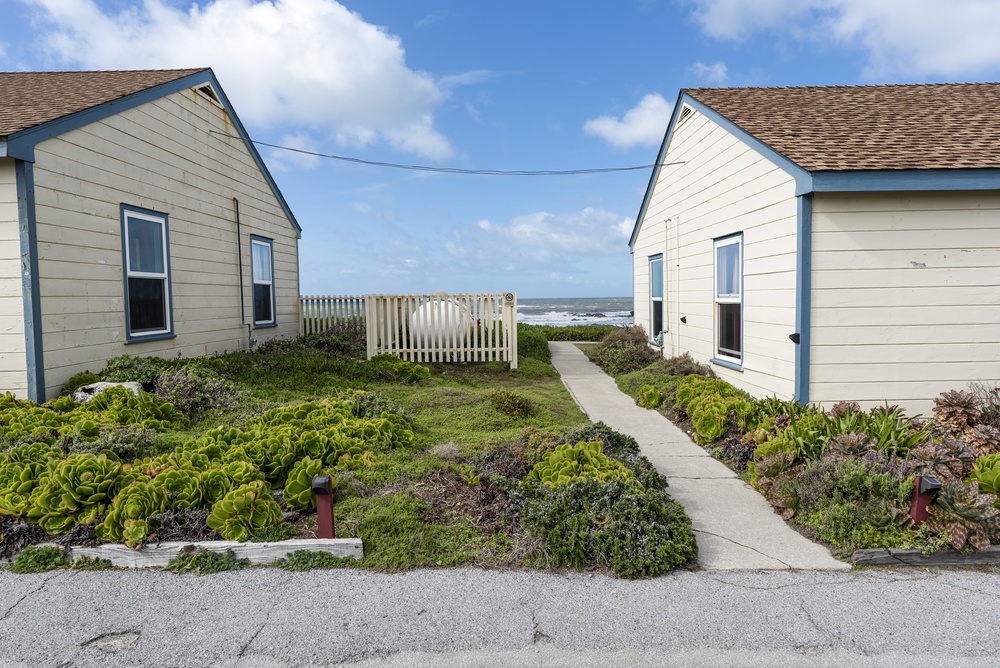
Located about 45 miles south of San Francisco, Pescadero’s 700 residents face a trifecta of power-outage vulnerabilities — coastal storms, wildfire risk, and its position at the end of the utility feeder — that leaves them without power about 18% of the time. In two years (2021-2022), Pescadero experienced 400 power outages, with 25 of those lasting longer than a day and the longest nearly two weeks. The $16.5 million microgrid promises to give the town up to three days of backup power in average winter months and more than seven days during the summer. Its current design calls for 1.5 MW of solar and 8 MWh of battery storage.
Second, Pescadero is served by a community choice aggregation (CCA), a public agency that buys power on behalf of a community, as an alternative to a utility. Conventionally, CCAs seek out the cleanest and least costly power for a community. Pescadero’s CCA, WestLight Energy (previously Peninsula Clean Energy), has added energy resilience to its services.
Developing community microgrids isn’t always easy. It requires bringing together a host of different government and private parties to navigate regulation, permitting, development, finance, engineering and construction. Many local governments lack the expertise. A CCA, however, couples energy expertise with a community-first mission, so is positioned to bring together the parties needed to get a project built.
“When a community faces a challenge that doesn’t have an obvious solution, local public agencies like WestLight Energy have an opportunity to bring partners together,” said Shawn Marshall, CEO of WestLight Energy. “That’s exactly what happened here. This project shows what’s possible when community organizations, local government, utilities and clean energy partners work toward a common goal.”
Third, California has created a limited pathway around one of the biggest obstacles to community microgrids — the over-the-fence rule. Similar barriers exist in other states through utility franchise rights, exclusive service territories and restrictions on private electrical infrastructure crossing public rights-of-way. The particulars vary but in practice these rules make it difficult for a nonutility project to move electricity from one property to another across streets or utility-controlled distribution territory.
California didn’t eliminate the fence, but created a gate for a microgrid to pass through, with the utility as the gatekeeper, through a community microgrid tariff and incentive program. The microgrid developer applies to the utility for participation. If approved, the community microgrid can use the utility distribution wires to move its power. The utility retains control of that part of the microgrid, along with its ability to connect and disconnect from the main grid.
In its announcement, WestLight said PG&E had approved the final funding needed for the microgrid: a $3.5 million grant through the microgrid incentive program that the state mandated the utility set up in 2021. WestLight will provide $10 million to the project, and the County of San Mateo will provide $3 million.
In addition, PG&E plans to spend up to $4 million on interconnection and microgrid studies and upgrades to enable the microgrid to safely island.
Other project participants are technical partner Clean Coalition, the county’s Sustainability Department and Office of Emergency Services, and Irma Rodriguez Mitton of Arriba South Coast.
The microgrid project emerged from the community. Mitton, founder and executive director of the community-based nonprofit Arriba South Coast, partnered with community members to find a way to deal with the town’s power outages. Mitton sought out WestLight to help with the microgrid incentive application and bring together additional experts and partners.
We call a lot of things community microgrids
Pescadero isn’t traversing entirely new turf in creating a town-wide microgrid — although it pushes the model further.
In 2013, San Diego Gas & Electric built a microgrid that serves about 2,800 customers in Borrego Springs, a remote desert town in San Diego. The town was vulnerable to power outages because it was served essentially by one transmission line running through storm-prone, rugged terrain.
It differed from the Pescadero project in that it was utility-led, not driven or developed by a municipality, community aggregator, or other local entity. It wasn’t a bottom-up endeavor, which is the purest vision of the community microgrid for advocates of energy democracy.

Blue Lake Rancheria in Humboldt County, California, also has a community microgrid. The project supports six buildings and an American Red Cross evacuation center at a tribal resort and casino. During regional outages, it has served as a resilience resource for surrounding residents who use the facility to refrigerate medicines, get hot food, and plug in devices—and has been credited with saving the lives of those reliant on electricity-dependent medical devices.
But Blue Lake is on a single property and doesn’t extend to nearby residents, so it also doesn’t embrace the community concept as fully as Pescadero.
Another is the Redwood Coast Airport Microgrid in Humboldt County.
That project is smaller geographically but important structurally. It serves 19 airport and retail operations on a PG&E distribution circuit rather than merely serving one property. The California Energy Commission calls it the first front-of-the-meter, multi-customer community microgrid in PG&E territory.
Its significance extends beyond those 19 customers. The project helped establish regulatory arrangements that ultimately contributed to tariff and incentive structures that support the Pescadero microgrid. However, it does not serve residential customers. It is loosely a community microgrid in that it keeps vital transportation services operating, including the Coast Guard, as well as retail operations.
Last, multiple privately developed microgrids in California—and other states— are called community microgrids because they are built to serve a public facility but do not extend much—if at all—further.
A good example is Ameresco’s McKinleyville Community Services District microgrid at the Hiller Park wastewater treatment plant in Northern California. Ameresco was selected in March 2020 to design and build the microgrid. It combines solar PV, battery storage and the plant’s existing diesel generation, with a microgrid controller that allows the wastewater facility to keep operating during PG&E outages and wildfire-related outages.
Elsewhere in the US, an array of projects fall under the community microgrid theme, including Bronzeville in Chicago, Illinois, a neighborhood-scale, multi-customer example, and Reynolds Landing in Alabama, a residential microgrid that serves a 62-home subdivision. Both are utility-led projects.
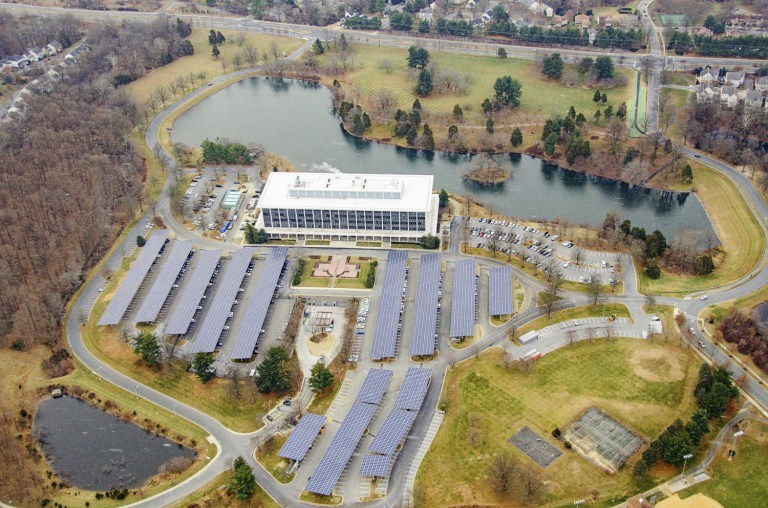
Montgomery County, Maryland and Chelsea, Massachusetts, have community microgrids with more direct community or local government involvement. Montgomery County, for example, developed and operates its microgrids through public/private partnerships under energy-as-a-service contracts. The microgrids serve public safety headquarters and a correctional facility, transit depots, and an animal shelter, with dozens of community resilience hubs planned next. The microgrids keep public services running during outages, but they do not send electricity to surrounding homes.
Chelsea, Massachusetts, is particularly unusual. Like Pescadero, it arose from local action, but it takes a different technological approach. The microgrid connects buildings virtually, not physically via wires. Each building gets its own solar, battery storage, controls and other resilience assets it can rely on during a power outage. But instead of sharing power from those assets building to building, it coordinates power through cloud-based controls and manages it as a portfolio.
This approach allowed Chelsea to avoid running afoul of local utility Eversource’s over-the-fence rules, while still managing the assets as a portfolio to save money and participate in potential grid service programs, like demand response. The longer-term vision includes incorporating affordable housing and other buildings, but the project is still in its first phase.
No project on this list incorporates as much “community” as Pescadero. It was initiated by the community, carried forward by a community aggregator, and will bring resilience to nearly every part of the town: residents, businesses and critical facilities.
But can the Pescadero microgrid concept scale to other communities?
“Our vision is to create a replicable model for developing community microgrids across the state, where CCAs are the ‘bridge’ between the community and the utility,” said Marshall.
The aspiration seems plausible in California. The state has a tariff and incentive structure that provides a limited pathway for multi-customer microgrids to operate over utility distribution networks. And California has a preponderance of community choice aggregations to help—25 in operation serving more than 15 million customers in more than 200 cities and counties, over one-third of the state’s population, according to the California Community Choice Association.
Only 10 other states allow community choice aggregations, with Maine as the most recent addition, and none as expansive in number or activities as California’s. Still, they may be the most likely candidates for community microgrids, provided they can overcome the utility-over-the-fence rule.
Still, CCAs aren’t the only plausible route, and utility ownership isn’t the only path, as Chelsea, Mass., and Montgomery County, Maryland, indicate.
“When you have a community-focused/public-serving organization, whether that’s a CCA or other public entity, that can help convene residents, local government, local utilities, funding, and technical partners and expertise, you can develop the kinds of solutions needed to meet current energy challenges,” said Jana Kopyciok-Lande, WestLight Energy’s director of innovation strategy.
Until recently, cities and towns tended to have pressing civic needs that put energy issues on the back burner. That’s changing with the rise of data centers. Community concern is growing that AI’s energy appetite will drive up local energy prices and drive down electric reliability. That makes this a good time for communities to focus on local energy development. Pescadero isn’t built yet. But its plan suggests a community microgrid could be closer to what its name promises—a project that creates energy resilience for the whole town, not just the fire station.