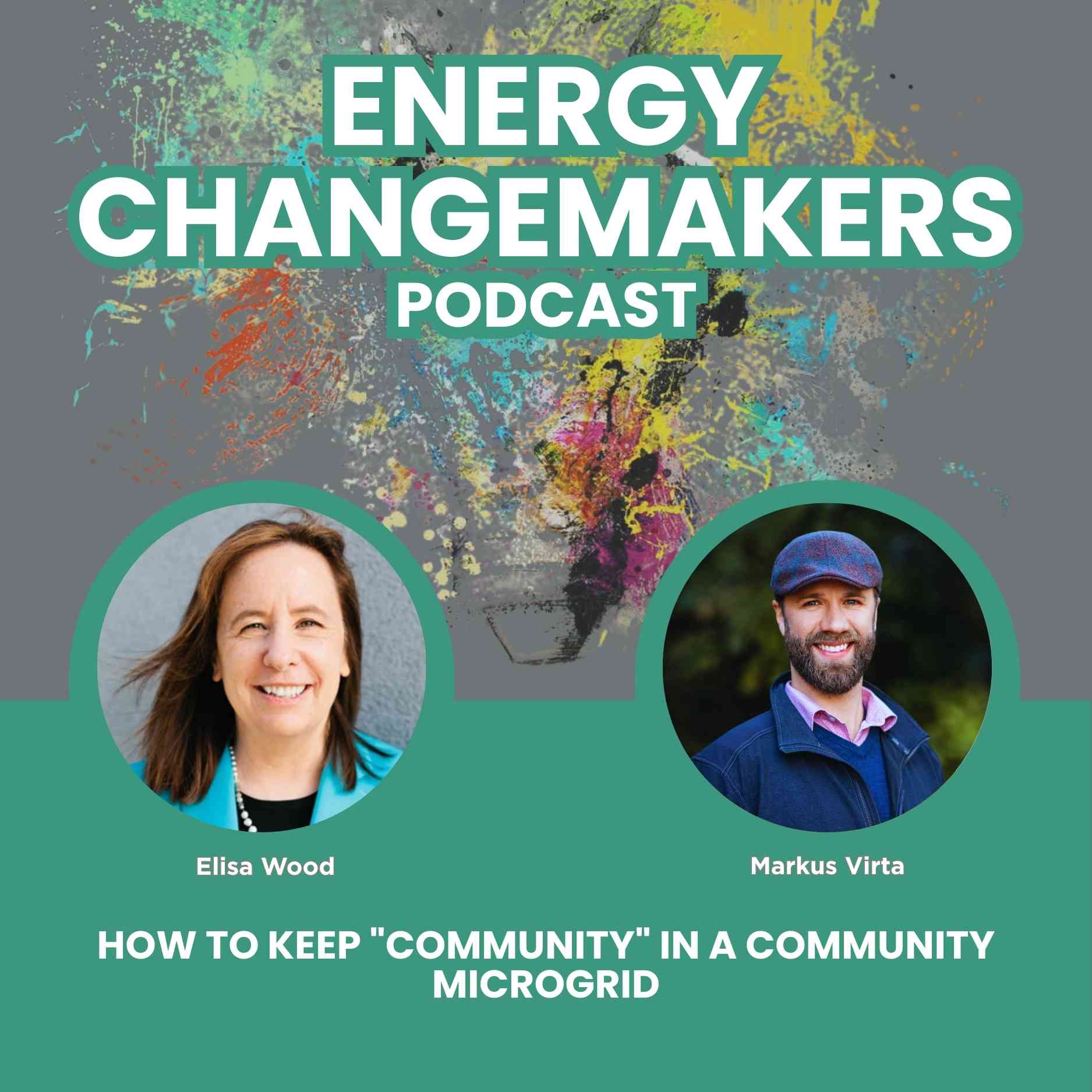
After 16 years working in clean energy, Markus Virta, co-founder of Cascadia Renewables, has seen a pattern: microgrids tend to fail when engineers lead, and communities are expected to follow.
Flip that model—let communities lead, and engineers respond—and projects move faster and face fewer obstructions.
In the latest Energy Changemakers Podcast, he explains how he used this model to develop several successful community microgrids in Washington state.
Traditionally, microgrids are designed from the top down. Developers identify a site, size the system, and then look for a use case to justify it—often centered on critical infrastructure like fire stations or emergency shelters.
But that approach can miss something fundamental: where people actually go during a crisis.
It’s not always where developers expect.
One of the clearest examples comes from the Orcas Center Microgrid, named Microgrid Project of the Year by Solar Builder Magazine.
Located on Orcas Island in Washington State, the system pairs solar with battery storage to provide backup power. On paper, it’s a fairly standard setup.
In practice, it revealed something deeper.
The performing arts center where it’s installed turned out to be the community’s true resilience hub—not the fire station, not the school, but the place where people naturally gather when things go wrong.
That insight didn’t come from modeling software. It came from listening. Your best friend in this endeavor may be the community’s emergency response manager, he says.
Virta points to several projects that underscore the same lesson:
- A tribal nation relocating critical infrastructure to higher ground in anticipation of a major earthquake
- A rural fire district that relied almost entirely on diesel generation for 30 years before transitioning to cleaner, more resilient energy
- A national museum repurposed as a hub for emergency medical equipment during crises
Each case began not with a technology decision, but with a question: What does this community actually need when the grid goes down?
Check out the full conversation on Apple, Spotify or YouTube.